Student Survey Journals: Kat Apokatanidis, Koroni Acropolis

Editorial Note: This post was written by Kat Apokatanidis, a University of Toronto PhD student, about working at the site of Koroni.

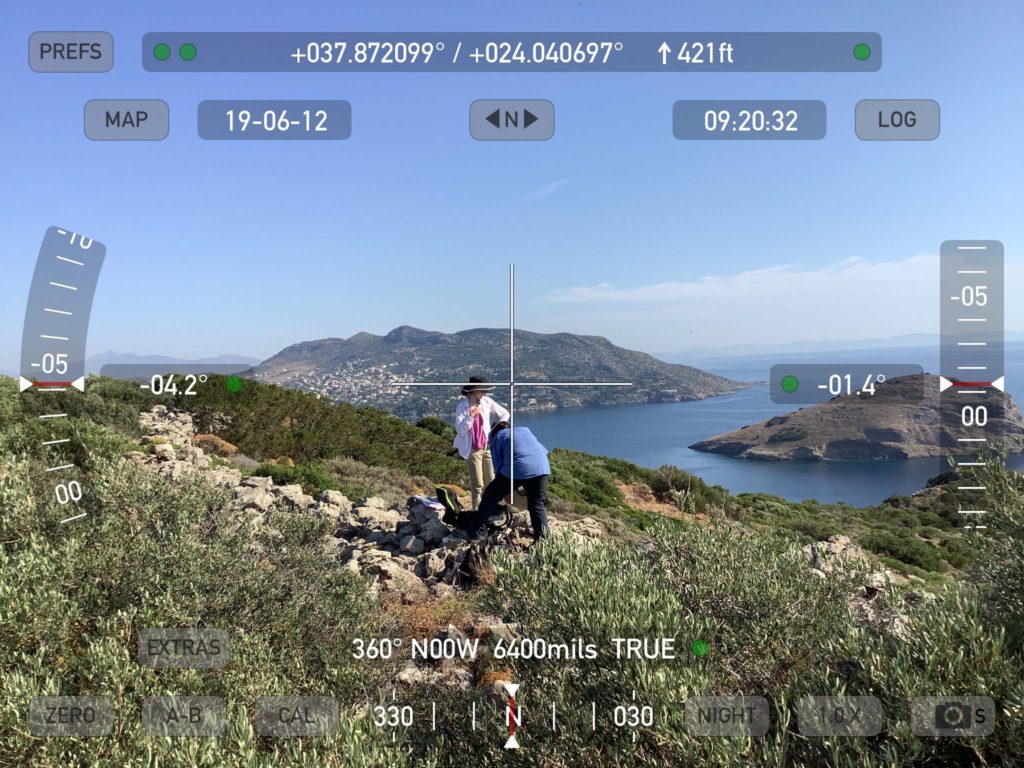
Kat surveying on Raftis island (Photo credit: K. Alexakis)

There is something defiant about being an archaeologist. The job is to go to places that usually are left alone. From tombs to acropoleis these spaces are now all more or less forgotten, consumed by time because that is how the world works. These are the first couple of thoughts that cross my mind as I climb the mountain side to reach the acropolis of Koroni for the first time. The climb is, to put it mildly, an effort. It is early in the morning, the sun barely cresting the peak of the acropolis. I lift my head and try to see above the maquis to estimate how far we have left to climb. My legs are already burning from the effort. Every morning on the BEARS project I curse my sedentary lifestyle. Without fail (or, rather, with the utmost failure) I am always the last one to reach the circuit of fortifications at the top of the peninsula where we are surveying. Today is no different. Completely out of breath by the time I reach the top, embarrassingly taking forever to catch up with the others, I try and mask my feeble wheezing. Thankfully, the others are drinking water while admiring the view, not taking account of how winded I am. 

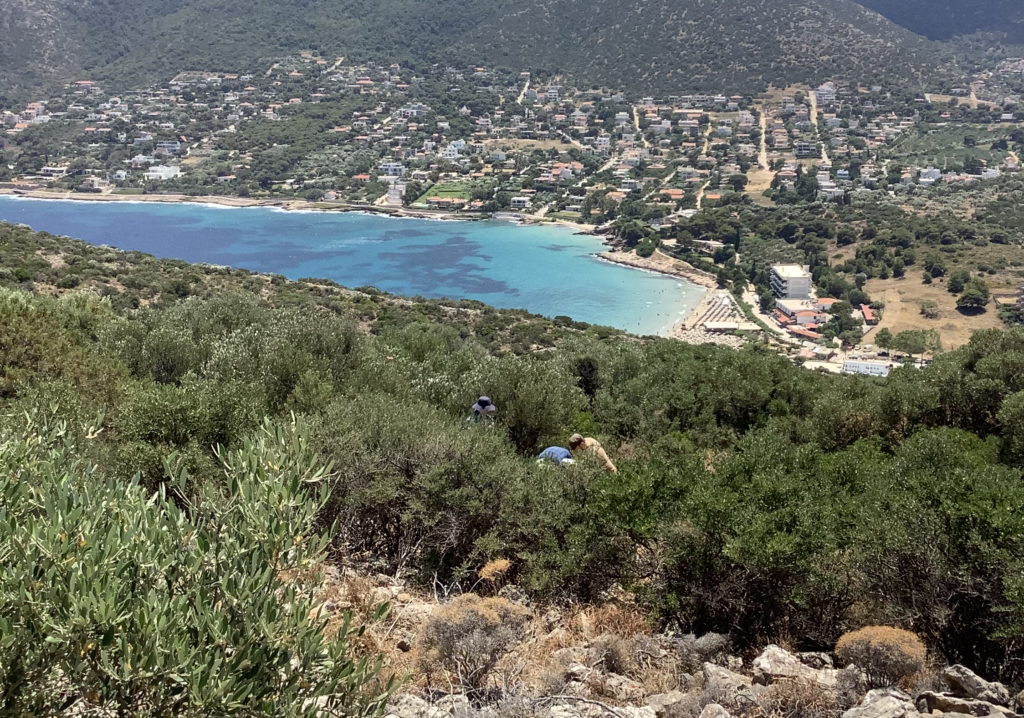
A survey team shrouded in maquis on the Koroni acropolis, just above a very modern beach development (Photo credit: M. McHugh)

After our team leader briefs us on the day’s plans (the number of units we were to try and cover, whether or not we would be doing total collection of finds, the new skills we were to try and learn by taking up different posts like data entry or mapping) we set to work. Crouching over the ground, battling (and mostly losing) with maquis, and trying not to lose myself in the incredible views that spread out below the acropolis, I marvel at the fact that though thousands of years have passed we still find things lying around on the ground in plain sight. I arrived on the project expecting to find some artifacts on the surface that would potentially hint at how important this area could have been in antiquity. But I did not expect that we would find so many artifacts lying on the surface. Broken amphorae handles, sherds (yes, not shards) from pottery vessels of all kinds, black-glazed fine-ware, even remains of rooms and walls; all of these can still be found after so many years, barely even hidden in the landscape. 

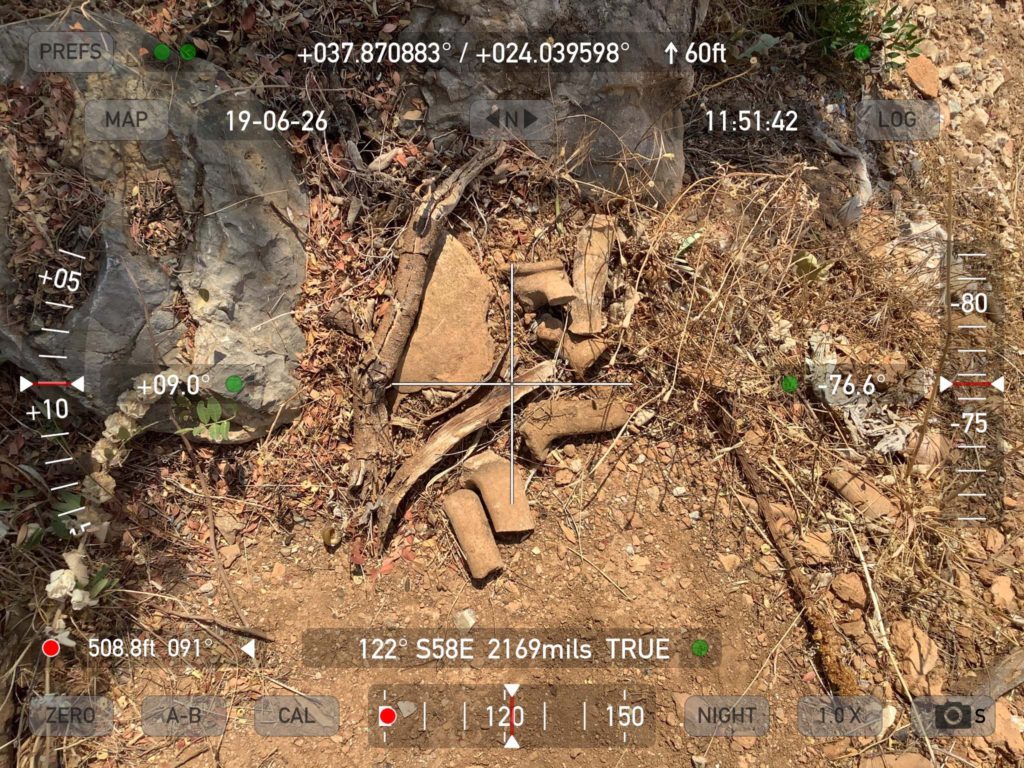
Sherds and tiles litter the surface of the site of Koroni (Photo credit: M. McHugh)

A lot of what we talk about as we work concerns using these surface remains to get a sense of the space that was occupied thousands of years ago. For instance, we are trying to figure out where and how artifacts found were dispersed and how and where they came to be concentrated in particular areas. It is work that demands a different, more nuanced understanding of how space is shaped throughout the years than an excavation would do, since so many factors have impacted the current distribution of material around an occupied landscape. These are tricky problems to work out, and we are trying to address them by thoroughly investigating and documenting the surface in an organized way. As a result, I feel a sense of real accomplishment each time we finish a unit. Finishing up procedures of our last unit before our lunch break, I steal a glance at the area we have covered so far, my teammate still counting sherds and rooftiles. I feel that today I have gained a better understanding of the layout of the acropolis; having started working in the valley of the settlement earlier in the week and finally climbing to the top and working this space, I can begin to imagine the ancient settlement of Koroni as a real, living place. 

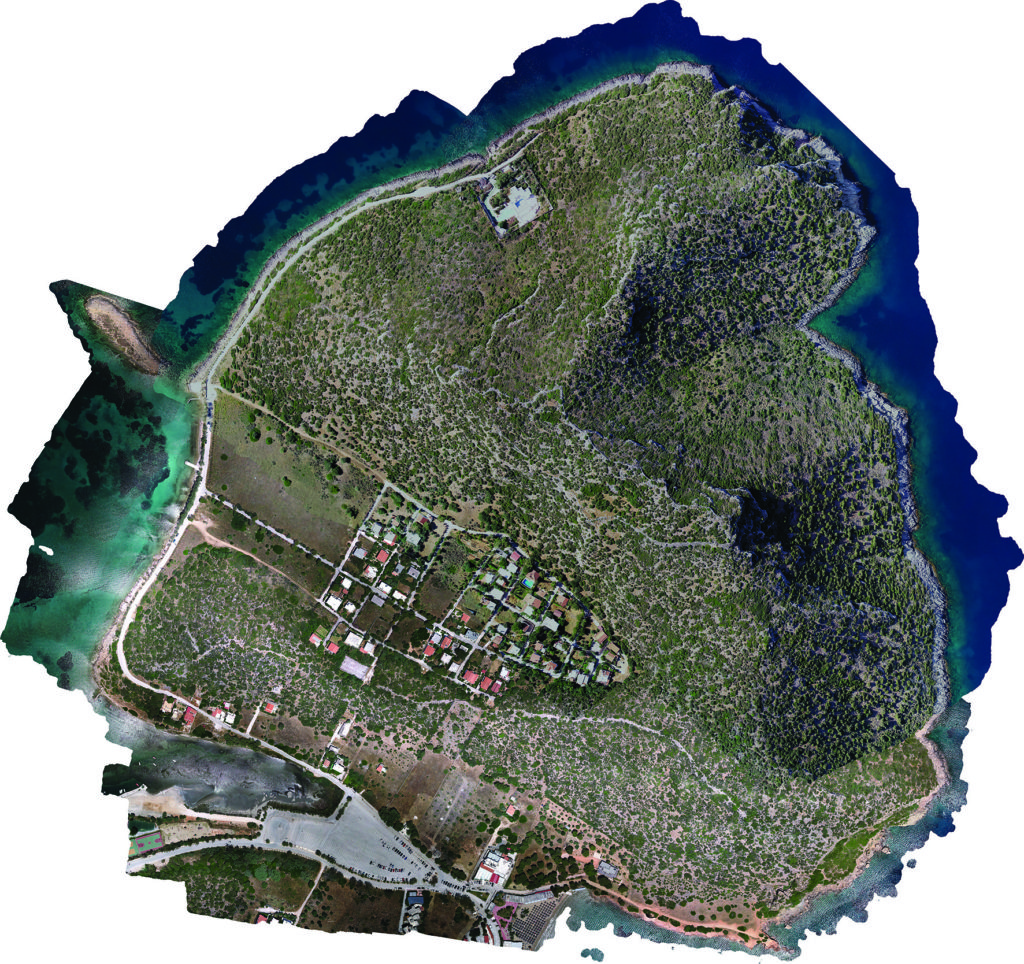
Orthophoto of Koroni peninsula (Photos provided by D. Nakassis)

This feeling of bringing the past to life in one’s imagination is something that arises at various, seemingly random moments throughout one’s studies in Classics. As a former philology student I have felt it at numerous points throughout my years in the field of Classics. Indeed, there is something quite magical about the realization that you can understand literary texts from two thousand years ago. Having said that, archaeology is different. When in the field, imagining the past is inevitable; there is something about standing in a place and touching things from so many years ago that incites aggressive daydreaming. The things you notice are peculiar: the way the amphora handle fits in your fist, how smooth black-glazed fine-ware feels against your fingers, what it means to look out to the horizon from what remains of defensive walls; one gets a sense of time as a continuum. The people who lived here, on the acropolis of Koroni, stored their food as I do, used nice plates from which to eat like I do, and stared at the horizon to where Raftis island stands as beacon to the sea ahead, and farther still, to the blueish hues of the island of Euboea looming in the distance, just like I am doing now. On the other hand, double checking the data from the unit we have just finished and turning off the iPad, I am not dreading a pirate attack while I head over to where our team leader has found a shady place with a killer view for our lunch break.

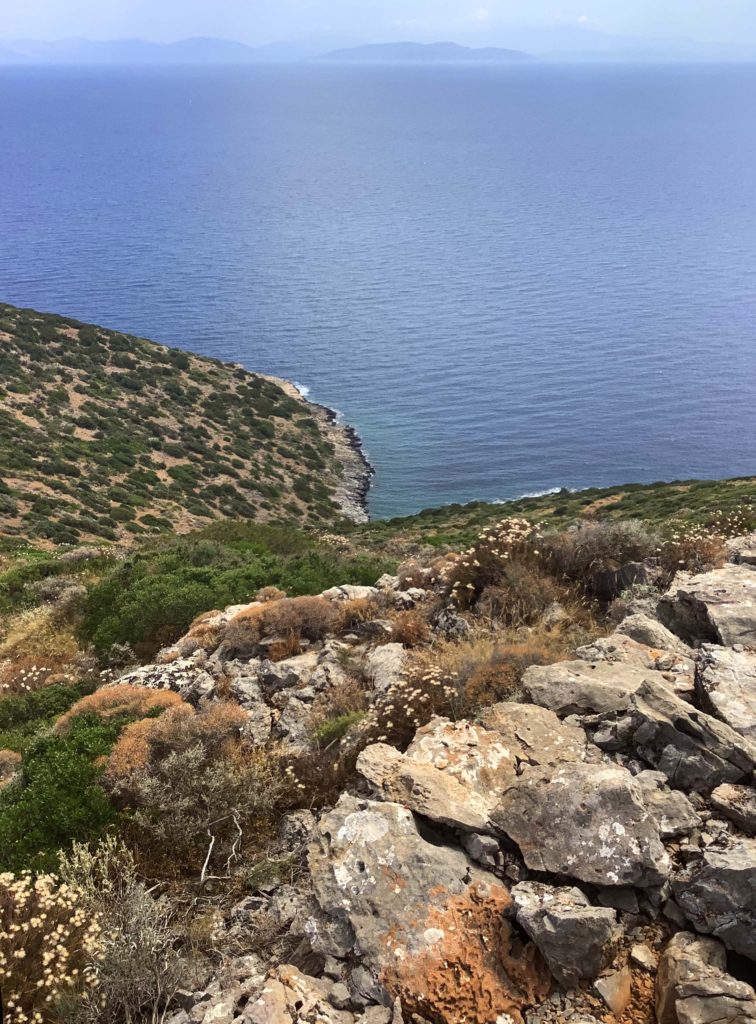
View to the northeast from the Koroni Acropolis (Photo credit: M. McHugh)

The western part of the Koroni peninsula is now partly occupied by country houses, while the town of Porto Rafti occupies the shores of the bay to the northwest. But we take our lunch break up on the highest point of the citadel and look out to the east, the landscape is peaceful, almost completely silent. It is so quiet, in fact, that I turn in surprise as a butterfly flaps its wings at a nearby branch of a maquis. I cannot say I have ever heard the flap of a butterfly’s wings before; the quiet that exists up here is so profound that you find yourself noticing small things, like the shadows cast by ants, or the indolent way with which a spider repairs her web. And though this silence most definitely did not permeate the abandoned site when it was at its prime, this current desolation, this current peace is as much part of archaeology as daydreaming about the past is. The short breaks we took were some of the moments I looked forward to the most; I eagerly would select a flat-looking rock for a seat, take out my meal and settle in the shade of the thicket. When people are tired, yet love what they do for a living, one finds that conversation among them is most interesting. So, when my teammates start conversing, I listen intently. During these lunch breaks archaeology starts to make sense to someone like me, with no training in archaeology, and with no prior knowledge of what archaeology can uncover. 

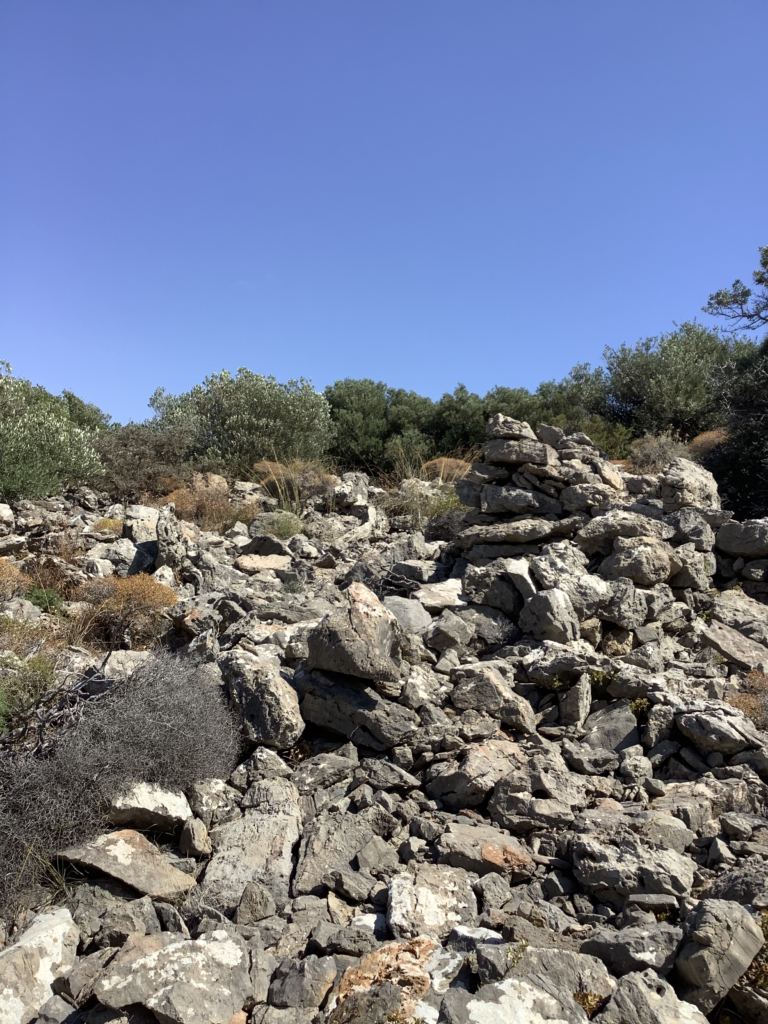
A ruined structure on the Koroni acropolis (Photo credit: M. McHugh)

As the conversation turns to ideas and theories on what life in Koroni would have been like, I learn a lot about the way that archaeologists approach problems. I try to follow the logic as my teammates speculate on how people would have decided where to build houses or where to post guards on the walls, which question leads them to a whole different conversation about reconstructing the original height of the ruined fortifications. Even though I’m not used to talking about problems like this, the group includes me in their discussions, explaining some of the things they think are especially challenging concepts. I try to think of something intelligent to say yet find that I cannot contribute very much. But I listen intently, coming to the realization that no matter how gruelling, no matter how demanding, no matter how exhausting physically and mentally the work of being an archaeologist might be, it has a far greater allure than the study of ancient literature, and I am excited to learn more. Compared to my new colleagues, I feel like an ant straining to gaze up at giants. Fortunately for me, up here, on the long-abandoned acropolis of Koroni, even an ant can cast a shadow.


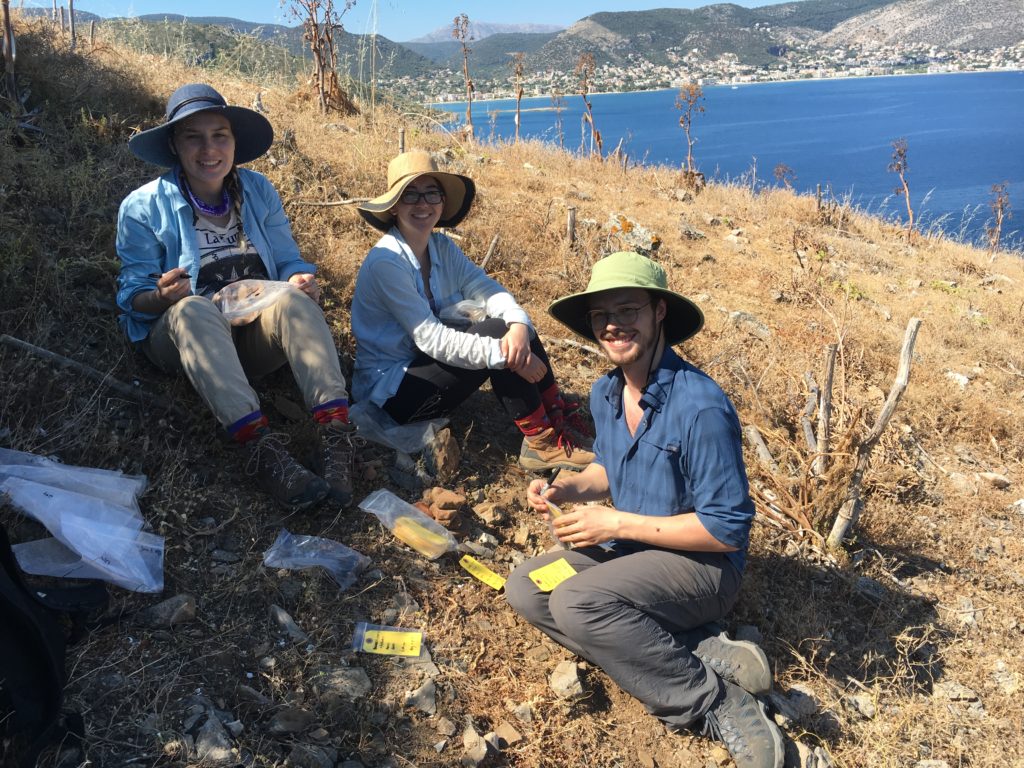
Koroni surveyors atop the north face of the acropolis fortifications (Photo credit: I. Chorghay)

Student Survey Journals: Irum Chorghay, Week 2

Editorial Note: This post was written by Irum Chorghay, a University of Toronto student, for whom BEARS was an inaugural experience with field archaeology, after the second week of survey.

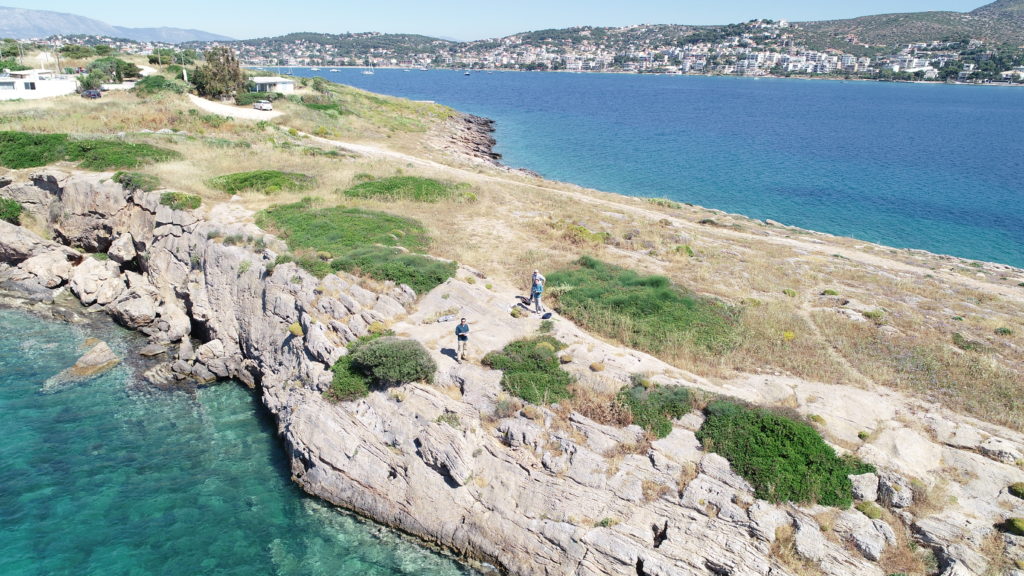
A drone's eye view of the Pounta peninsula with some team members (Photo credit: D. Nakassis)

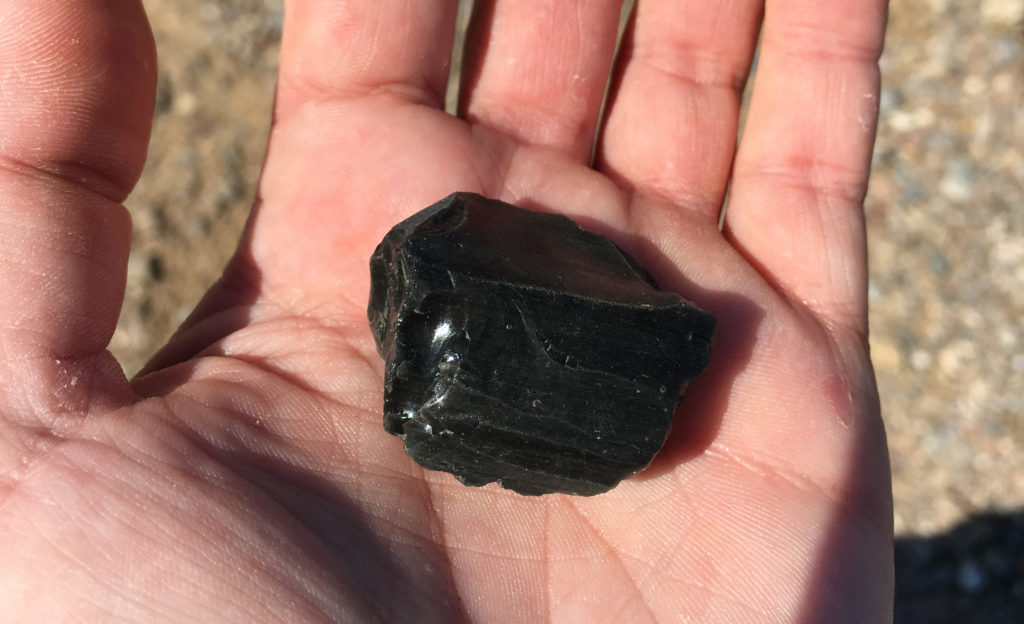
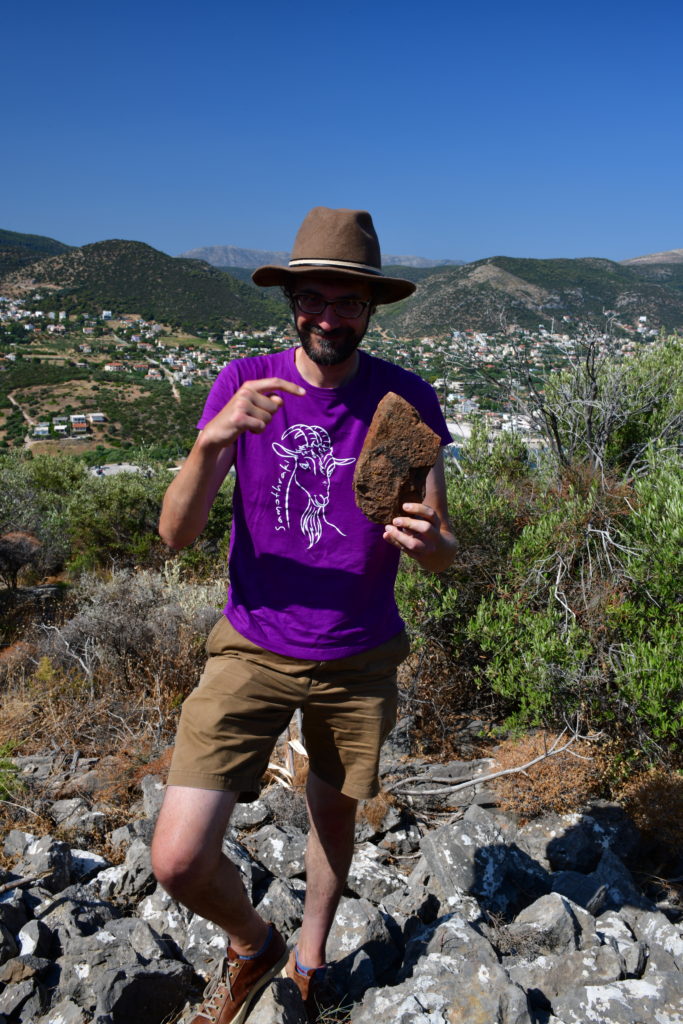
The waves are unruly this week, so no trips can be made to Raphtis Island. Instead, our team spends the week at Koroni and Pounta, which is a peninsula that divides the Porto Rafti harbor in half. Arriving at this new site, the first thing we notice is the wind. A rusty modern tower stands towards the apex of the strip of land we are to collect in a grid over the next few weeks, and we stand behind it for shelter against the aggressive gales. At Pounta, the visibility is high, and we are taught to look for lithics, and especially obsidian. I pick up several stones to show to Grace, our team lead, before I figure out what to look for: obsidian is a dark grey-black stone, and where it’s been worked, it shimmers. Pounta is a public location, and we conduct survey next to the homes of local Greeks. Somehow, the ground is littered with obsidian anyway. 

Obsidian in hand at Pounta (Photo credit: S. Murray)

At Koroni, much is the same as last week: the valley varies in visibility, we find mostly roof tiles and amphora handles, and we log all our findings—as with the other sites—into the database on one of the project’s iPads. In the log, we include sherds collected, roof tile counts and weight, the visibility of the grid, and any other features that we think are relevant. We take a picture of the unit to include in the log and leave the roof tiles behind. The tiles will be revisited, we are told, when a tile specialist arrives towards the end of the survey season.

Phil demonstrates how to read tiles in the field (Photo credit: S. Murray)

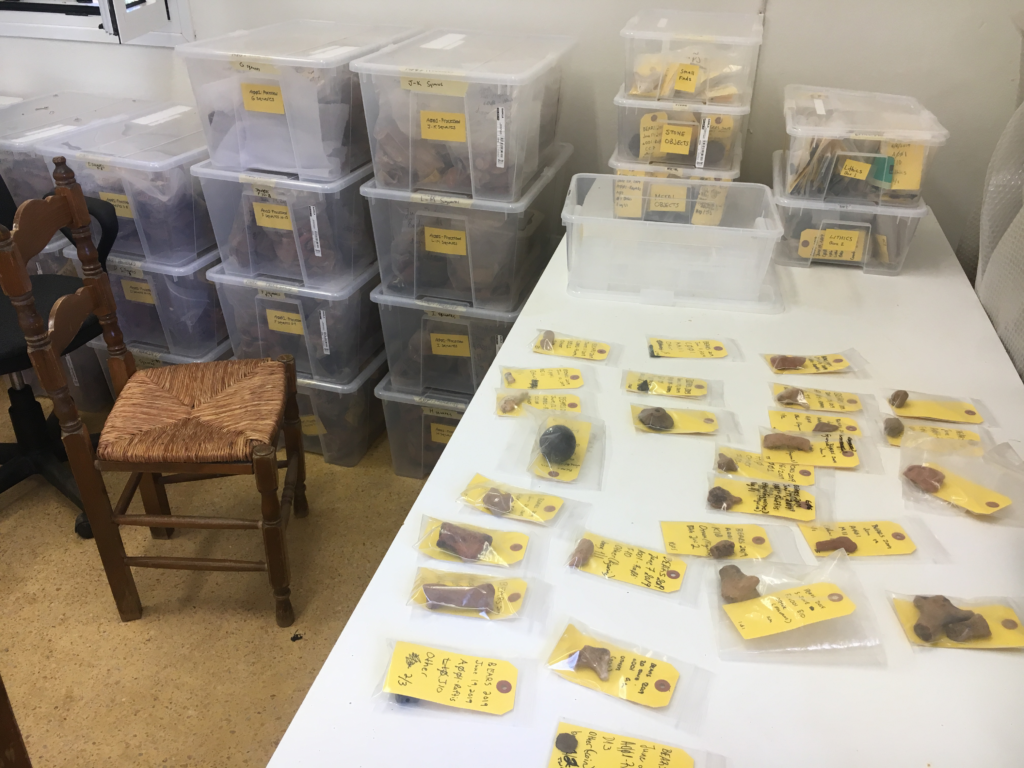
Once a week, we each get a chance to work at the apotheke, a local museum located charmingly in the middle of nowhere. Here, we soak and clean the previous day’s finds, using brushes for larger pieces and our fingers for painted pottery to avoid scrubbing away its decoration. We recount and re-bag the finds, separate fine-ware from coarse-ware pottery (the former is often a grey-like color, better fired, and simply more delicate, whereas the latter is often larger and heavier), write new labels, weigh the lots, and enter the weights into the database. Because it’s so windy at Pounta, we count the obsidian from that field team in at the apotheke, so that the tiny pieces of debitage don’t fly away into the sea from the site. At the end of the day, we wait for the field teams to deliver new finds. For the most part, cleaning and sorting the pottery is relaxing and feels productive.

BEARS survey finds in the Brauron museum (Photo credit: S. Murray)

On the last day of this week, Maeve—another team lead—has something exciting planned for the three other undergraduates working at Koroni that day: gridding. Having completed our survey of the Koroni valley, we gather our equipment—a GPS unit, measuring tape, a compass, flagging tape, a sharpie, and a clipboard with the site map laid out—and hike up to the Koroni acropolis. We spend the day mapping out and flagging the grid. We use the GPS to find an approximate point, and confirm the distance with the measuring tape, hoping to capture any errors that the mountain’s uneven topography might yield. The northern edge of the site is marked by a fortification wall and beyond it lies the slopes of a rugged cliff. By the end of the day, I start to feel dehydrated and my teammate twists her ankle; we take a few moments to recuperate under what little shade we find. Sitting on the slope of the Koroni acropolis, looking out to the town stretched out below us and the deep blueness of the water spilling from the land’s borders, we feel accomplished: it’s been a good and hard week! 

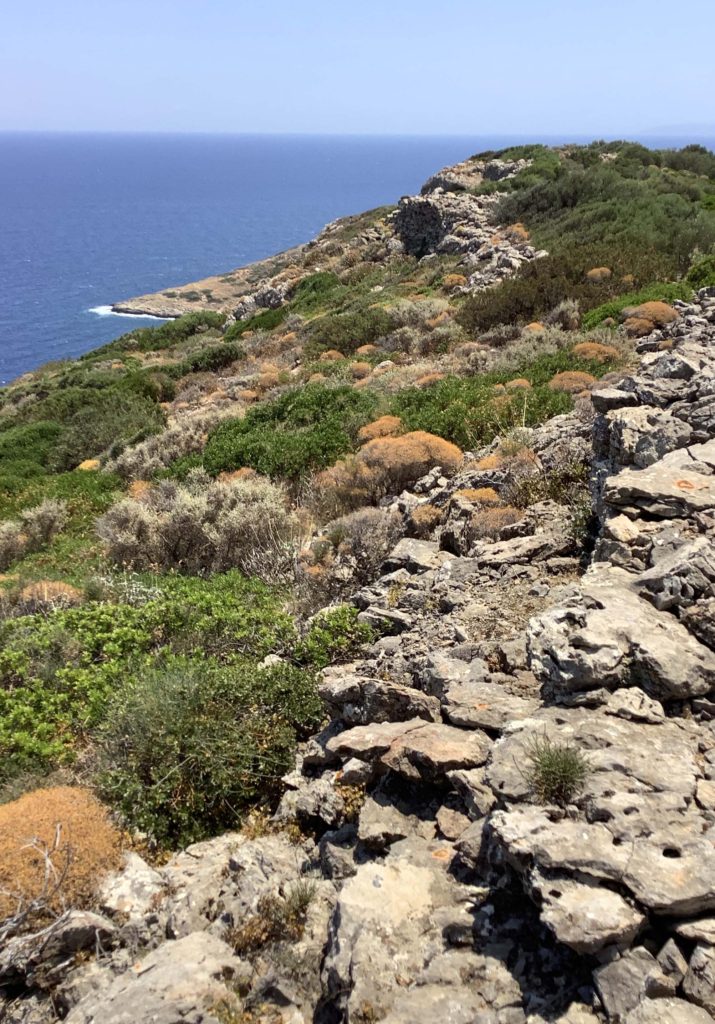
The fortification and cliff atop the Koroni acropolis, looking east (Photo credit: M. McHugh)

Student Survey Journals: Kat Apokatanidis, Raftopoula

Editorial Note: This post was written by Kat Apokatanidis, a University of Toronto PhD student, about a reconnaissance trip to the islet of Raftopoula.

Two important BEARS boats (Photo credit: K. Alexakis)

I curse under my breath as I miscalculate my weight distribution and nearly fall backwards into the sea; gasping in surprise I whip my head up as one of my teammates holds onto me. He was helping me come ashore from the dinghy, and I hear him take in a sharp breath as he only just manages to save me from plunging into the Aegean for a morning bath. I hear the captain behind us utter a surprised cry as he attempts to stop the boat, the sudden change in weight rocking him dangerously from side to side. He comments wryly that I am a little too eager to swim and I look back at him sheepishly, apologising profusely. I manage to straighten myself back up but I am so embarrassed. My teammate pats me on the back before bending to retrieve his bag while the captain waves at me and then returns to collect the others from the main boat. I see the rest of the team in the distance straining to look at us, and wave a hand at them indicating I am fine; they wave back and cry out sighs of relief. It is only day four of the B.E.A.R.S. project and I already manage to pose a threat to a fellow archaeologist! To his credit my teammate does not seem to be at all annoyed at me; but I follow him and make sure to tell him to just let me drown next time, since he is more important than I am, being an actual archaeologist in training, while I was a tag-along philology student. He laughs and we make our way up the side of the small islet, the first stop of the day.

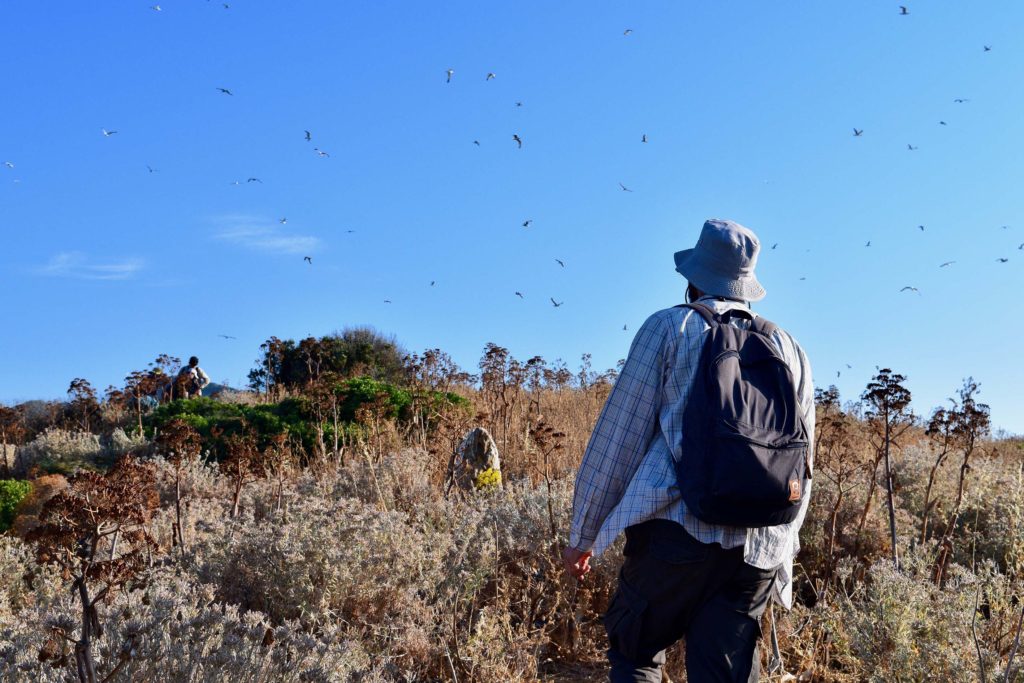
Herakles wanders up the slope of Raftopoula (Photo credit: K. Alexakis)

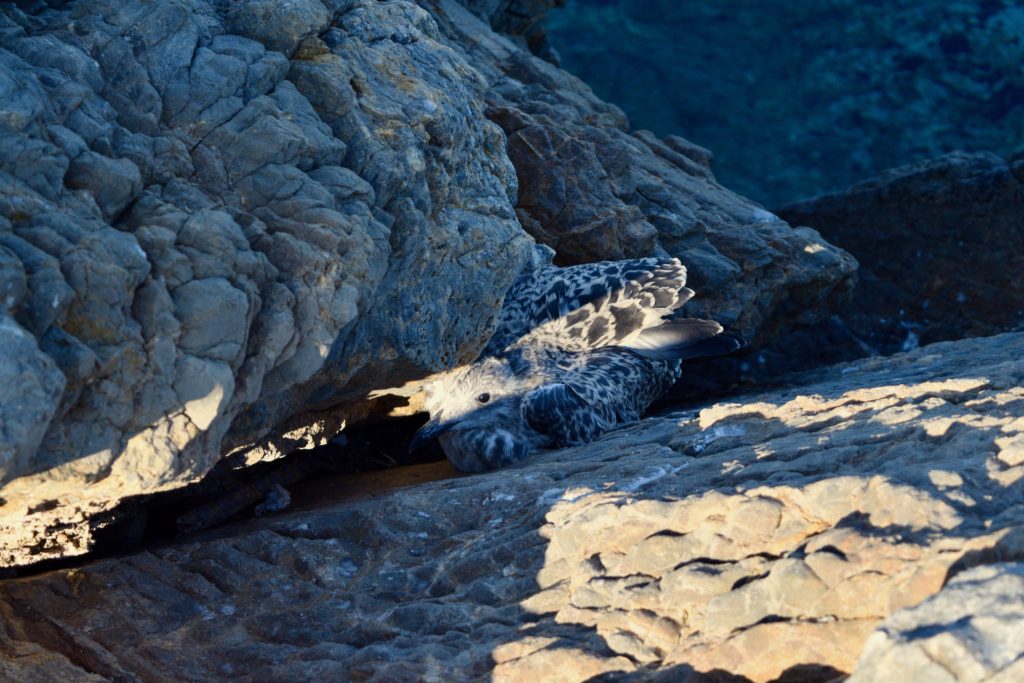
The islet we were to briefly inspect is aptly named Raftopoula, or ‘little-Raftis girl’; it is situated only just to the north-west of Raftis island. As I walk (very carefully) along the otherworldly terrain my legs are still shaking from the surge of adrenaline and it is all I can do not to look up at the flying seagulls, as I was increasingly distracted by their constant cries; clearly, this islet is theirs, and our presence is largely disturbing them. I pause in order to wait for the rest of my team and get instructions from our team leader. Once we all assemble, we are told that we’re only here for a reconnaissance mission, to determine if we will need to set aside time to conduct gridded collection here in future weeks. As I roam around Raftopoula, I cannot help but feel as if we are at the edge of the world. The low hills and jagged cliffs, coupled with the eerie, bluish hue of the morning sun all work to create an atmosphere of an abandoned frontier, or desolate backwater, depending on how you perceive the edge of the world to feel like. I don’t find much on the surface, though others do have some artifacts in their bags. I hear them comment that the diagnostics are like the ones found on Raftis. I am eager to get there and see what all the fuss is about; for now, I turn my attention back to the ground and attempt to wade through the thickets of maquis. One of my teammates cautions as I walk towards a small opening; there is a pocket within the thicket to my right where a young seagull fledgling is taking cover. Not being able to fly yet, it sits immobile, its method for avoiding predators. Suddenly, the cries from the gulls overhead make so much more sense, their worry for their offspring ear-splittingly evident. 


A fledgling seagull on Raftopoula (photo credit: K. Alexakis)

I thank my teammate for the heads-up and carefully make my way through the thicket, trying to avoid disturbing the little one further, while also trying to avoid spider webs. I find some pieces of pottery. The fact that we find anything out here on this tiny islet is intriguing. I eagerly try to hear what the others have to say about the possible reasons people would dock their ships here in the ancient past. It did not seem to be an easy thing; our own captain took some time to find a proper place to drop anchor before taking us to shore. It was only because of the day’s prime weather conditions with minimal winds and soft currents as well as his impressive navigating skills that gave us the opportunity to even come ashore. Thus, the mystery remains, though this is not to say that ancient sea captains were less skilled in the art of seafaring. As the call to go back to the ship is heard, I cannot help but speculate about their motivations; what were ancient people doing out here on a tiny, rocky islet with no obvious anchorage? 

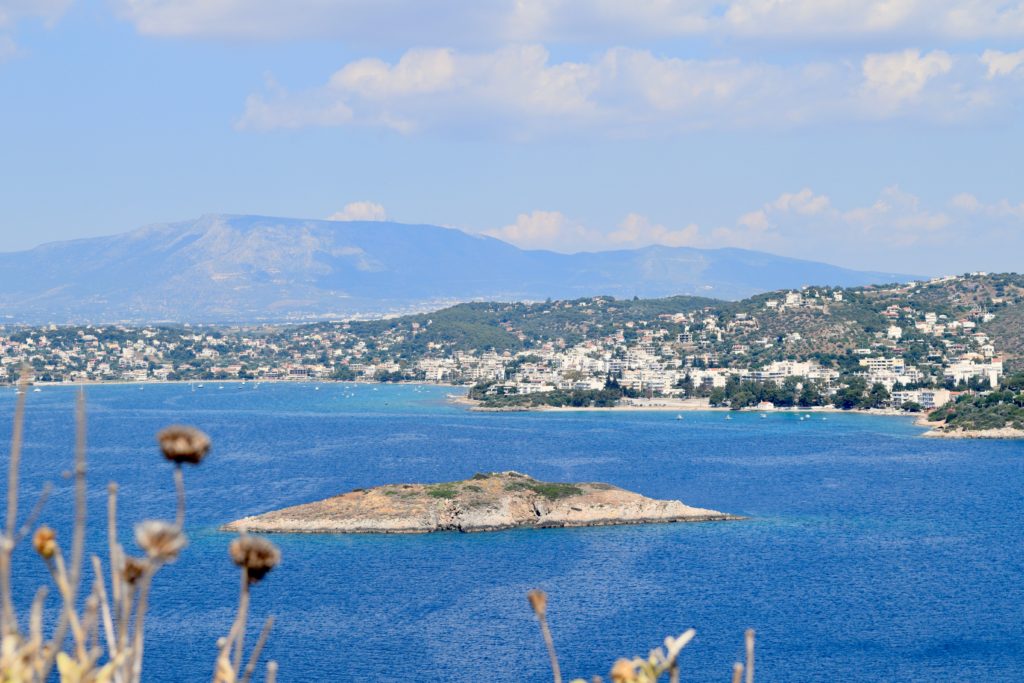
Raftopoula and northern Porto Rafti as seen from Raftis island (Photo credit: K. Alexakis)

We return to the shore in order to reboard the boat and head on to Raftis, where we will spend most of the day surveying grid squares. As I (very very carefully) board the dinghy, carefully following his calm instructions, my teammate from earlier standing at the ready next to me, I belatedly realise that the findings from this first week on the project all have exceeded any expectations and logical deductions. Safely in the dinghy, my teammates all securely sitting around me, we gingerly make our way to the main boat, trying to avoid getting tossed right into the jagged cliffside of the islet as the winds have slightly picked up. Thanks to the captain’s concentration and focused expertise, we arrive, dry and sound, at the main boat, the seagulls now quiet having returned to their nests. Surely, I think, the people going to Raftopoula in the Bronze Age were either adventure seekers or trying to get away from something; indeed, my excitement rises further at the thought that they may have been pirates, exceptionally skilled at navigating and intent on hiding away their riches. Yet with no discernible hiding places, nor any visible ways of defence, the islet’s otherworldly pull creeps into my mind and nests there, much like the seagull fledglings, quiet and still but ever aware, demanding caution and respect.


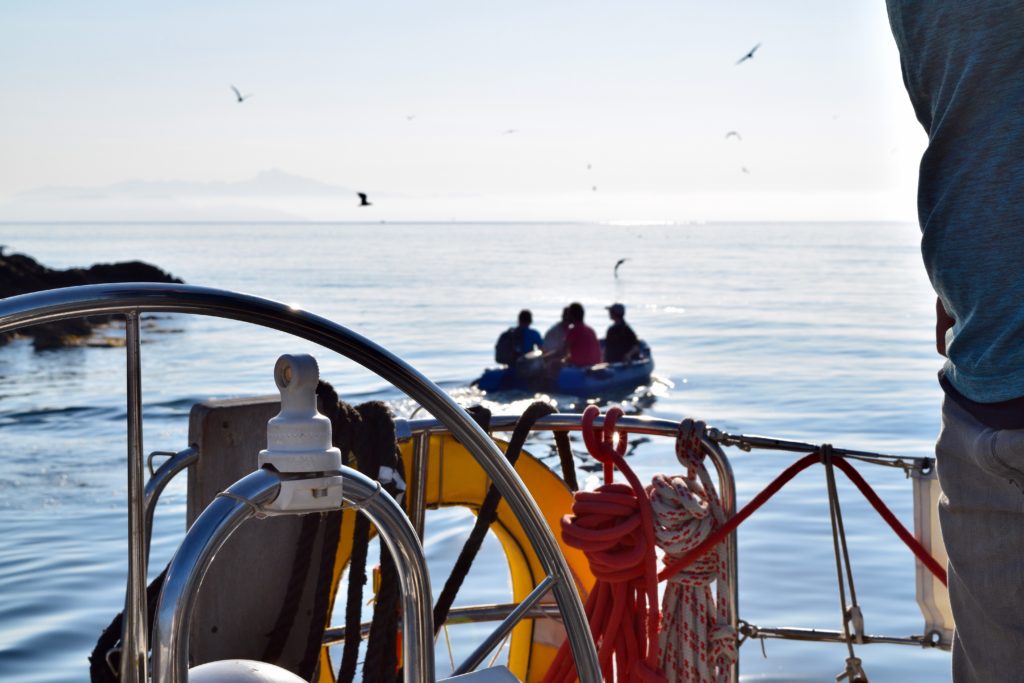
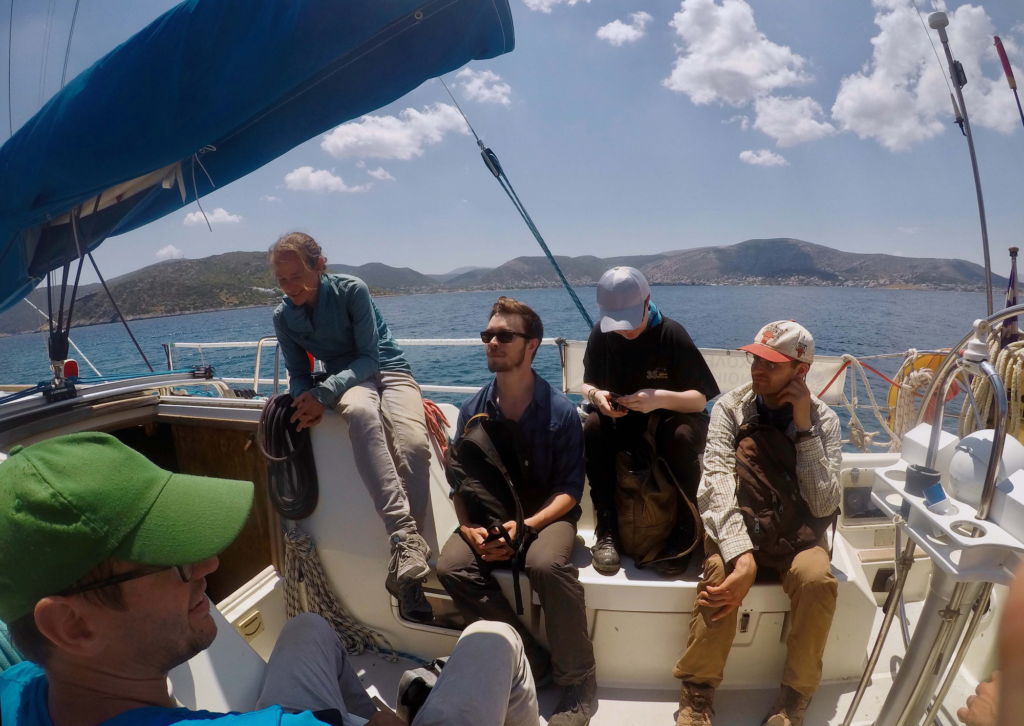
BEARS team members aboard the project boat and headed to Raftis island (Photo credit: K. Alexakis)

Student Survey Journals: Kat Apokatanidis, Brauron museum work

Editorial Note: This post was written by Kat Apokatanidis, a University of Toronto PhD student, about a day of work processing artifacts in the Brauron Museum.

Scenery en route to the Brauron Museum (Photo credit: Kat Apokatanidis)

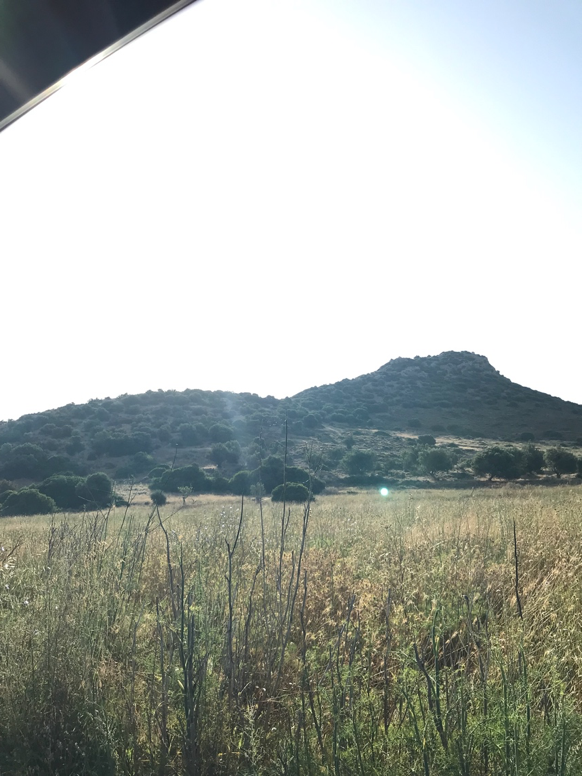
It is almost eight thirty in the morning and we are heading to the Brauron Museum in Attica, Greece, for a day of cleaning and organising. For a person who would always rather be cleaning and/or organizing, work at the Museum on the BEARS project is highly anticipated. On the drive to the museum, just over the pass from our base in Porto Rafti, the team admires the beautiful green mountainous landscape spread out before us. It is an early summer morning in the Greek countryside, which means there is plenty of glorious scenery and not much traffic (the beach tourists tend to sleep in later than we diligent archaeologists). The crunching of the gravel under the wheels is the only discernible sound on the outside of the car. Lively conversation is heard inside the car, however, as traditional Greek pastries and copious amounts of coffee breathe life into our small team. The morning sun shines golden through the tall field grass to our right and as I turn into the parking lot, dust swirling in our wake, I already feel the heat of the day to come. Car parked, backpacks hoisted and the stray dog lounging by the museum gate properly greeted and cooed at, we make our way to the entrance, the dog’s lazy but familiar tail-wag our first greeting for the day.

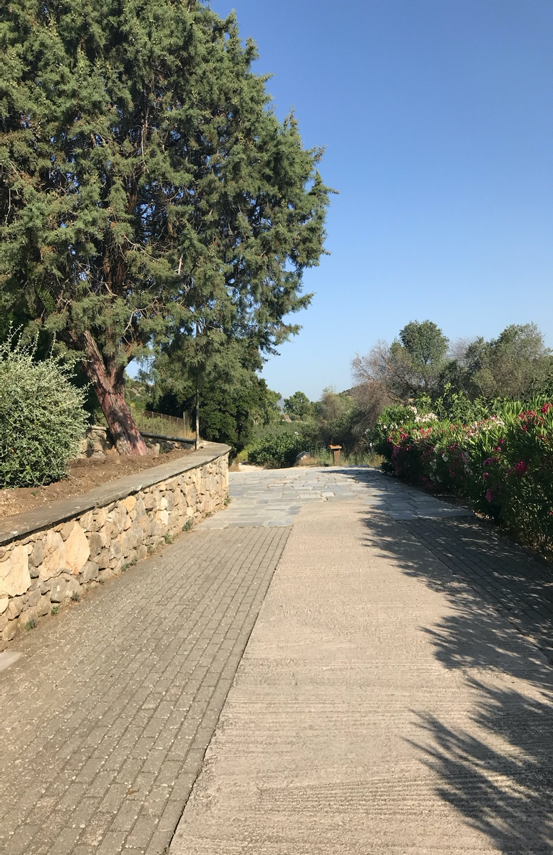
The entry ramp to the site and museum of Brauron (Photo Credit: Kat Apokatanidis)

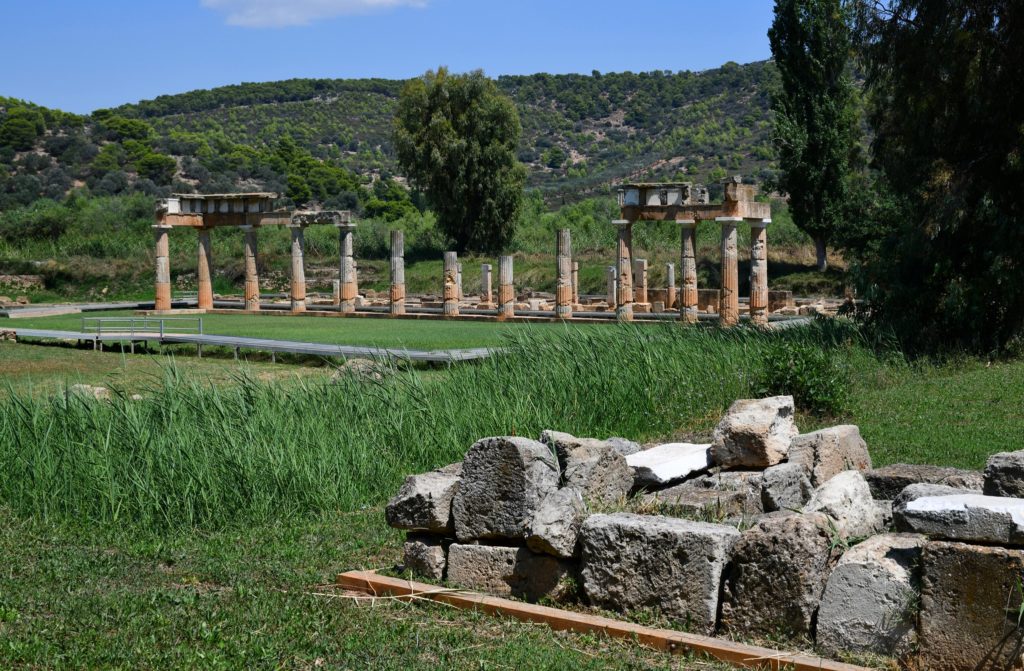
The Brauron Archaeological Museum is possibly one of the most well organized and well-kept museums I have ever visited. Situated in the middle of nowhere, not too far from the town of Markopoulo and the Athens airport, the museum is located on the grounds of the archaeological site of Brauron. Brauron was home to an important local sanctuary of Artemis during the Archaic to Roman periods, and the museum holds most of the finds from its excavation and from rescue excavations from the greater region of eastern Attica, which have revealed finds dating back to the Neolithic period. The Sanctuary of Artemis at Brauron was a cult centre for young girls entering into adulthood. Little girls of noble houses from Athens would participate in rituals as little she-bears, arktoi, and perform for the goddess so that their entrance into adulthood was blessed. The site is silent when we arrive, but soon enough children participating in school trips from nearby towns will be flocking to the museum. Quite apt in this case, seeing as the area no doubt was filled with children all those years ago. 

The archaeological site of Brauron (Photo credit: S. Murray)

We make our way up the stairs to the entrance and I am glad to step into the air conditioning as the heavy, metal doors swing open and the guard greets us. We sign in and deposit our backpacks in our designated cupboards. As we head downstairs, I cannot help but smile in anticipation; if you have never been in the storage room of a museum you have not really felt like Indiana Jones. I was never into the cowboy-hat and whip aesthetic but as I descend the stairs to head to the small courtyard where work, I cannot help but feel like I am missing important apparel. The ambience of the storage room is that of a mission briefing before Indie takes off on an adventure; rows and rows of catalogued objects, nooks filled with reconstructed pottery vessels, their tags sticking out in the dim dusty light with their distinctively flashy colors, the musty scent of washed clay permeating the room, all hint at muted adventure. These visual and olfactory stimuli present us with an aura of worlds silenced as we descend the staircare. I get the distinct impression that museums exist in a state of liminality, their residents waiting for the right scholar to give them their voice back, or anticipating the glance of the patrons so that they may relive their glory days. In order to reach our working area we have to walk across most of the extensive storage space, and so, as I do every time I am scheduled to work at the museum, I try to quickly make out the writing on the tagged boxes rising high above me. The narrow, high-ceilinged corridor leading to a small courtyard is lined with box upon box of catalogued artifacts, the shelves extending high above us. Some boxes contain pottery, some coins, and some bones; I am always struck at what constitutes archaeological evidence as I hastily try to read the labels on the boxes – vessels used for food, the means to buy that food, and, of course, the remains of those creatures who constituted food in the ancient past! 

As we step into the shed our team-lead opens the massive iron door separating the antechamber from a miniscule courtyard. We head to the workroom allotted to us by the museum to collect clean bags artifacts that we have already washed and that were set out to dry the night before, as well as to collect the bags of the unwashed finds from yesterday’s haul. Our small space at the back of the museum becomes alive with precise activity as, by now, all team members are familiar with the tasks to be performed. We each fall into a routine as we collect the washed finds, set up the weathered screens upon which we are to lay out the freshly washed pieces of diagnostic pottery, and position ourselves on our make-shift stools. We begin to clean the finds from the previous day’s workload. In the beginning, as we race to beat the sun’s glare, huddled at the far end of the small courtyard in the shade provided by the tall wall surrounding the museum, there is very little conversation. Our aim is to finish up the cleaning before noon, so that the sun does not burn us to a crisp. 

But as the hours pass by in companionable silence, and as we realise that we are making good time, conversation sparks. Unlike the perfunctory, exhausted commentary of lunch breaks in the field, museum conversation usually aims to contribute to our growing camaraderie. Though in the field we each tend to look out for each other by making sure no one gets left behind (*cough* babysitting me *cough*), even distributing the growing weight of our backpacks as the finds accumulate and our stamina decreases, in the burning shade of the concrete wall, we are now interested in learning about each other’s personal lives. Discussion about each student’s aspirations, and what brought them to work at BEARS, are common topics. And even though our acronym animal does not travel in a pack, I cannot help but feel that I have become a part of one; the first ever bear pack to exist.

I struggle to get up to wash the dirt from my bowl, the finds now almost all cleaned. It is always a surprise how physically tiring it can be to crouch for hours. Initially, I had thought that my days working at the museum would be less physically demanding than days in the field. And while there is certainly truth to that, my hip joints still hate me for straining them during those days at the museum. By the time I rinse out my bowl and place the washed items on a screen in optimal order for drying, the rest of my teammates have also finished up. After making sure all the cleaning supplies are put away, and that the netted stacks are in position under the heat of the sun, we head into our small workroom for our lunch break. So late in the day, the heat of summer is stifling. In the museum there are no briny breezes to soothe the heat from our bodies; there is only the musty scent of a museum storage room mixed with the mountain air idly blowing in the room from the two wide open windows. My hips are slightly less strained and relaxing by the minute as I sit in the old-school wooden chairs which normally grace old timey men’s coffee houses from the ’70’s. But as I hungrily bite into my spinach pie, courtesy of the best Greek bakery of all time discovered by our museum team-lead, I unceremoniously snort in disbelief at a comment from one of my teammates; something about him writing the best footnotes, a comment I know to be a lie, since none can match my footnote-writing expertise. And so, when our lunch break is over, and we proceed to the next part of our work for the day which entails organising, counting and cataloguing, I challenge my (naïve) teammate to a footnote composition face-off, incredulously realising that archaeology has wormed its way into my heart.
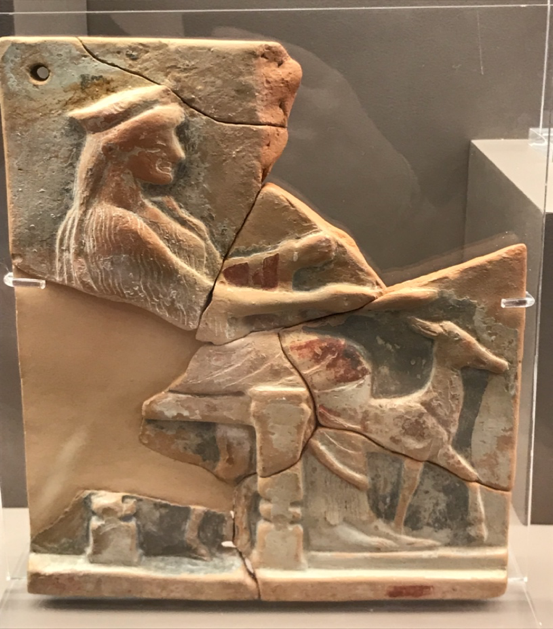
A terracotta plaque depicting Artemis in the Brauron museum (Photo Credit: Kat Apokatanidis)

Student Survey Journals: Irum Chorghay, Week 1

Editorial Note: This post was written by Irum Chorghay, a University of Toronto student, for whom BEARS was an inaugural experience with field archaeology, after the first week of survey.

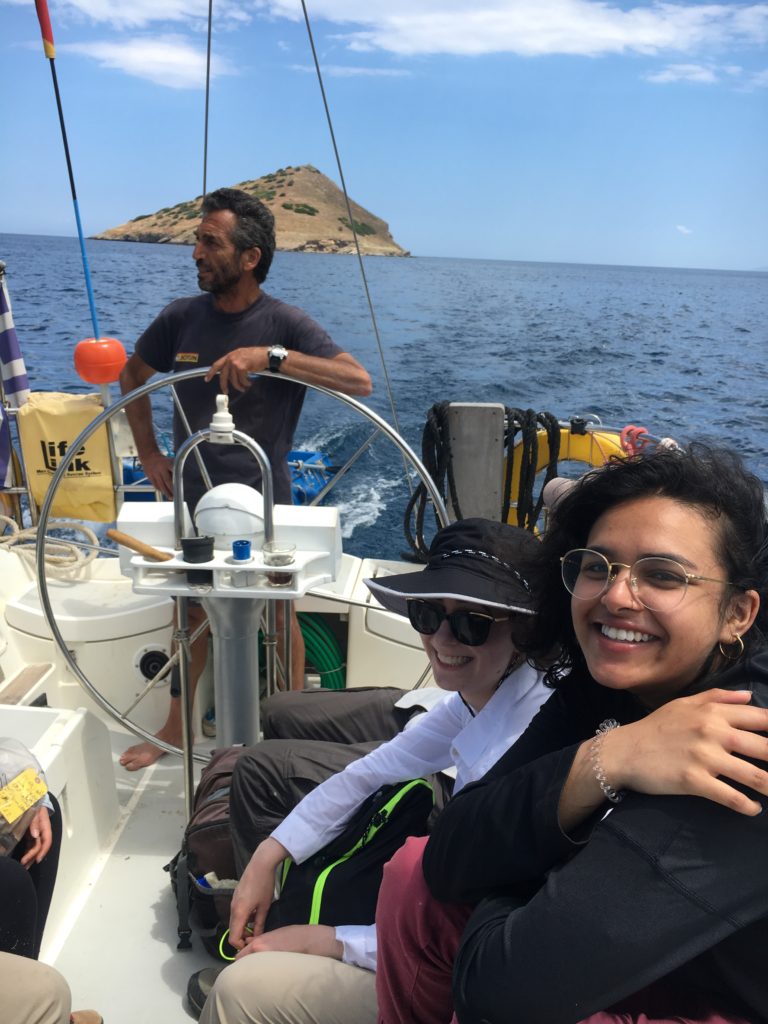
Jenny and Irum enjoy the boat ride to Raftis island with Captain Vasilis at the helm (S. Murray)

My first day as an archaeologist, I get to take a small boat out to Raphtis Island, one of three sites that our survey is focusing on exploring. We are staying in Porto Rafti, a resort town not far from Athens, and it is immediately obvious that this is not a typical area for an archaeological project like ours: a town full of beachgoers is very different from the usual rural landscape of surface survey. Each member of our crew for the day takes a walk along the narrow wooden ledge that bridges the gap between the edge of the harbor and the ship itself, and at seven in the morning, we’re tucked into the captain’s vessel and headed towards the mysterious island site. 

Isabella, Cassandra, and Taylor assess the survey finds from 2019's first unit on Raftis island (S. Murray)

When we arrive on Raphtis, I’m struck by how steep it is. Accustomed to the terrain of the city, I stumble hastily up the rocky, uneven side of the island, unsure of where we’re headed, or if the ground will ever even out (spoiler: it doesn’t). Dr. Catherine Pratt—one of the project’s directors—takes me and the three other undergraduates off to one end of the island, while Dr. Sarah Murray—the other project director—takes off with Dr. Robert Stephan—her right hand man—to set up the rest of the “grid.” I don’t know what this means yet. Dr. Pratt shows off pieces of pottery scattered on the island’s surface, the bits and pieces of ancient amphorae littered across the low-lying greenery. “The sherds with deep-set ridges and refined firing are Roman,” she tells us. Cassandra—a fellow undergrads—yanks a chunk of pottery out from underneath a small bush, and Dr. Pratt is thrilled. “It’s an amphora handle!” she exclaims, and the rest of us excitedly gather around her. For the most part, this is how we learn: closely examining the ground, picking up sherds and bringing them to Dr. Pratt until we learn what pottery looks like.

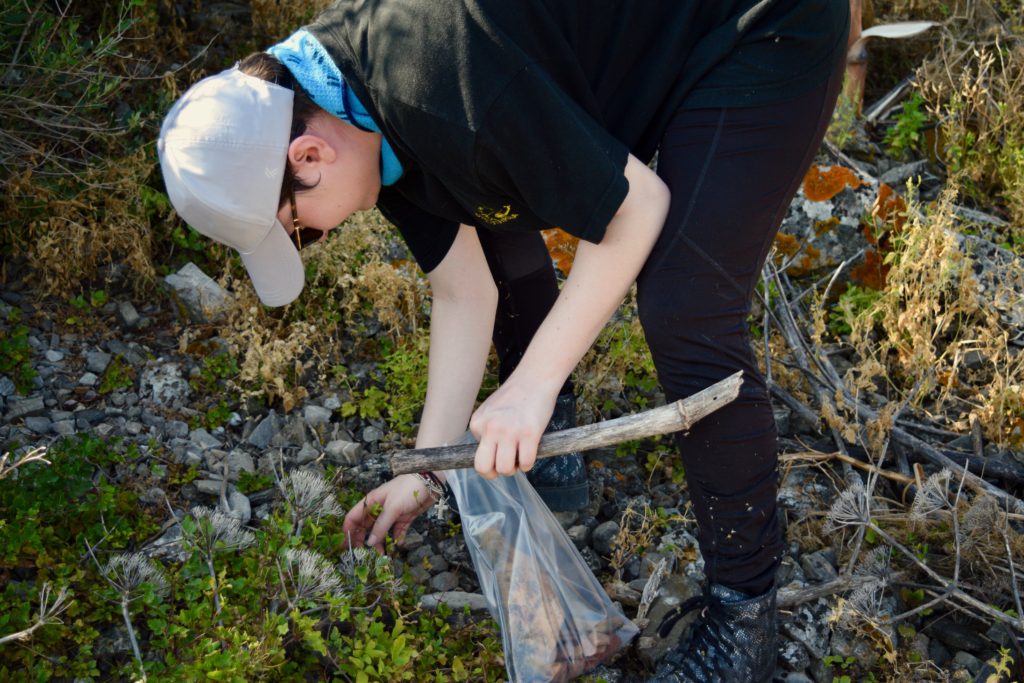
Next, Dr. Pratt guides us through gridded collection, and I learn what Dr. Murray and Rob were up to with their brightly colored flag tape. They have divided the island into a grid composed of 20 by 20 meters units, and each grid square is given a name according to the flag at its northwest corner: A1, A2, and so forth. We are told to do “total collection,” which turns out to be a long and painstaking process of collecting every sherd we see in the selected grid. We fill something like eleven of our large sized plastic bags with pottery and come out with just over a thousand sherds in total. I am told this is highly unusual and that this site is incredibly rich with finds. From here, our directors decide that we won’t be keeping all of the sherds that we collected in the unit: considering that we are a small team working within a limited space at the apotheke (the museum where we process and store our finds), and that there is redundancy within the information provided by these finds, selective sampling, Dr. Murray tells us, makes the most sense. At some point, I am struggling to navigate the uneven terrain, and I slip and fall face-first—only to find a large sherd of painted pottery. Dr. Pratt squeals again, and I learn that such a find—painted Mycenaean pottery on the surface—is almost unheard of, and I am reminded—neither for the first nor the last time—that this is a special project.

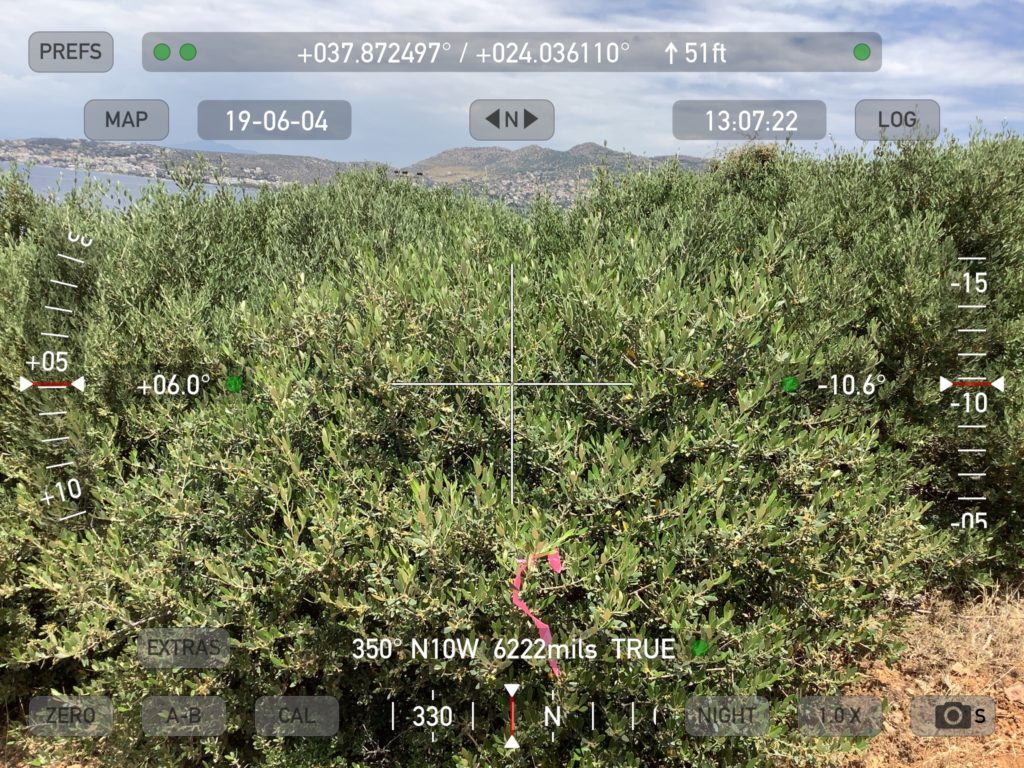
Glamorous shrub views in the Koroni Valley

For the rest of the week, the days I spend on the field are at the site Koroni, located on a peninsula on the south side of the bay, where I continue learning how to conduct gridded survey. We start out collecting in a small valley with variable visibility—entire survey units are sometimes covered in thick and impenetrable greenery that is as spiky and as tall as our surveyors. Koroni is not as rich with pottery as the island is, but we discover several amphora handles, roof tiles, pithos (jar) rims, and bases anyway. At the end of each day, we sit on the porch and empty our hiking shoes of burs and bits of greenery we’ve picked up along the way.